There’s a moment in every American energy argument where a real infrastructure problem turns into a joke.
Transmission lines? Good luck. Permitting? Impossible. Interconnection queues? A swamp. Building enough power for the next fifty years? Sure, right after everybody agrees at the zoning meeting.
Then the room laughs, or sighs, or shrugs, and the incumbent fuel system gets another year.
The problems aren’t fake. The grid is hard. Long power lines cross a lot of property, a lot of counties, and a lot of jurisdictions. A country with states, utilities, regulators, landowners, courts, tribes, environmental rules, and voters is always going to move differently from a centralized one-party state. Fine.
But a hard thing isn’t the same as a punchline.

AI Made The Wire Visible
For about fifteen years, U.S. electricity demand was nearly flat. Utilities didn’t have to plan for much growth, and mostly didn’t. Now data centers, new factories, and electrification have turned that around fast. In late 2025, the consultancy Grid Strategies tallied utilities’ own five-year forecasts and found they expected peak demand (the most power the system has to supply at any one moment) to grow by 166 gigawatts, up from 24 gigawatts in the forecasts made just three years earlier. About 90 gigawatts of that was data centers.
You’re right to be suspicious of forecasts like that. Grid Strategies itself thinks the data-center number is overstated by around 25 gigawatts, and plenty of announced projects won’t happen. The International Energy Agency still expects global data-center electricity use to roughly double by 2030, and it expects data centers to account for nearly half of all U.S. electricity demand growth over that period.
When one customer can show up asking for as much power as a small city, the grid stops being wallpaper. The substation becomes part of national competitiveness. The permitting fight becomes part of whether the next industry gets built here or somewhere else. The questions are old ones: where does the power come from, how fast can it be built, can it move to where it’s needed, and can a real project get connected before the opportunity passes?

The AI frame is the hook. The lasting question is older: who can build and move enormous amounts of electricity when the economy asks for it?
Video ↗America’s Waiting Room
The frustrating part is that America has more power projects lined up than it knows what to do with. The shortage is doors.
Every new power plant has to get permission to connect to the grid, which means a utility has to study what the plant would do to the system and who pays for upgrades. At the end of 2025, according to Lawrence Berkeley National Laboratory, about 2,060 gigawatts of proposed generation and storage were waiting in those lines, which the industry calls interconnection queues. That’s roughly one and a half times the capacity of every power plant now running in the United States, meaning what they could all put out at full tilt. Most of it is solar and batteries.
The queue isn’t a to-do list. Plenty of those projects are speculative, and some shouldn’t be built. But the process itself has become a trap. Projects that reached operation in 2025 had spent a median of more than five years (half waited even longer) between applying to connect and switching on. Of all the capacity that applied between 2000 and 2020, only 13 percent had been built by the end of 2025. About three-quarters had withdrawn.
Transmission is the same story. Big high-voltage lines (345 kilovolts and up) are how power moves between regions. In the early 2010s, the U.S. built an average of about 1,800 miles of them a year. In the first half of the 2020s, the average was about 540. Even 2024, a better year, managed about 900.
We’re trying to run a growing, electrifying economy through a grid we keep treating as someone else’s homework.
Meanwhile, In China
China looked at a similar problem and gave it a very literal name: “Eastern Data, Western Computing.”
The idea is simple. China’s eastern cities have the demand, the tech companies, and expensive land. The west and the interior have space and big energy resources: coal, wind, sun, and hydropower. So in 2022 the government approved eight national computing hubs and ten data-center clusters to push computing west, near the power, and connect it back east.
This isn’t a climate fairy tale. China still burns huge amounts of coal, and some of that western computing runs on it. Renewable power still gets wasted when the grid can’t move it. Provincial politics, waste, and overbuilding are all real. There’s no magic spreadsheet.
What China did was treat the map as an assignment. It asked where the demand was, where the land and power were, and what would have to connect them. Then it built the connections.
Extension Cords The Size Of Countries
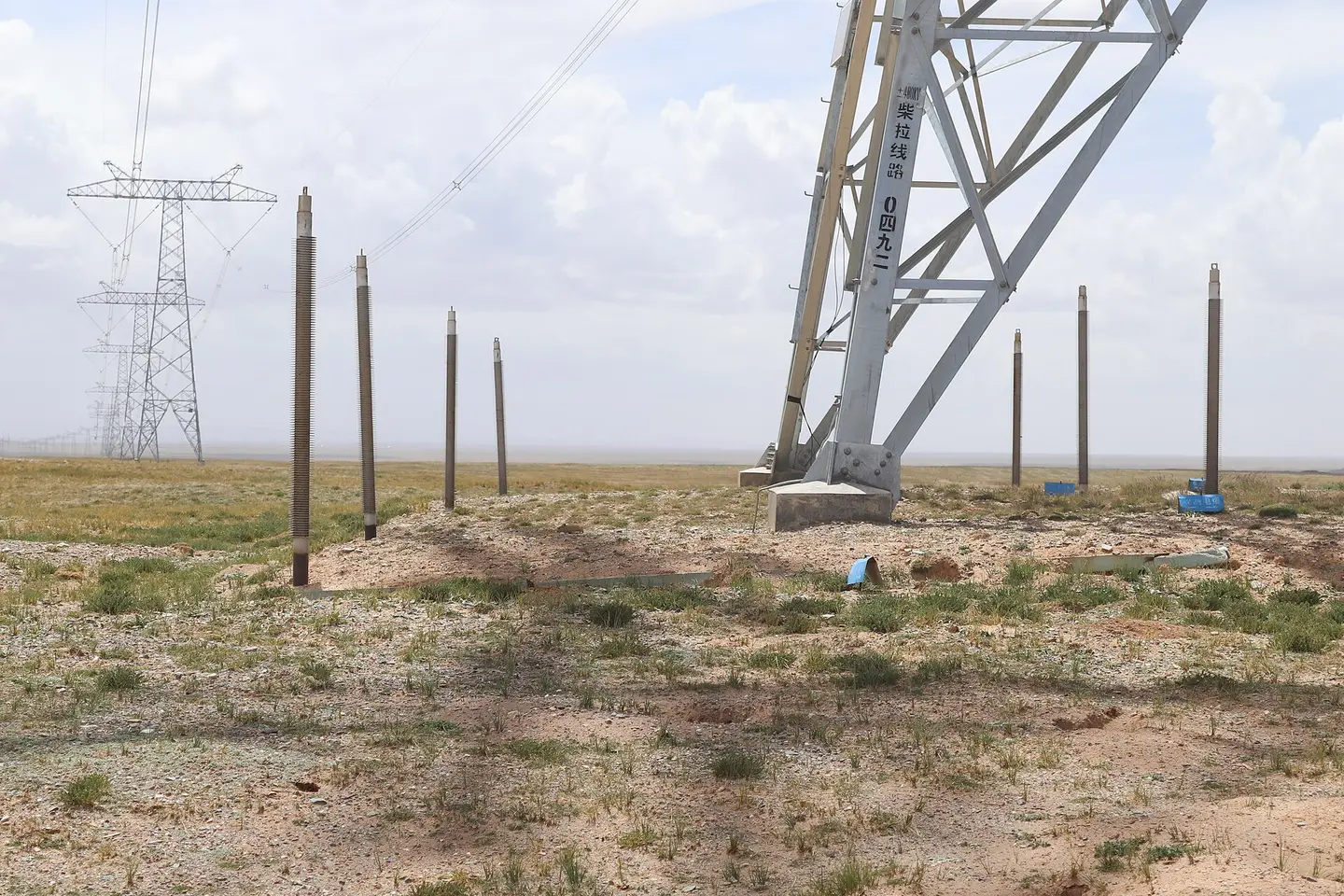
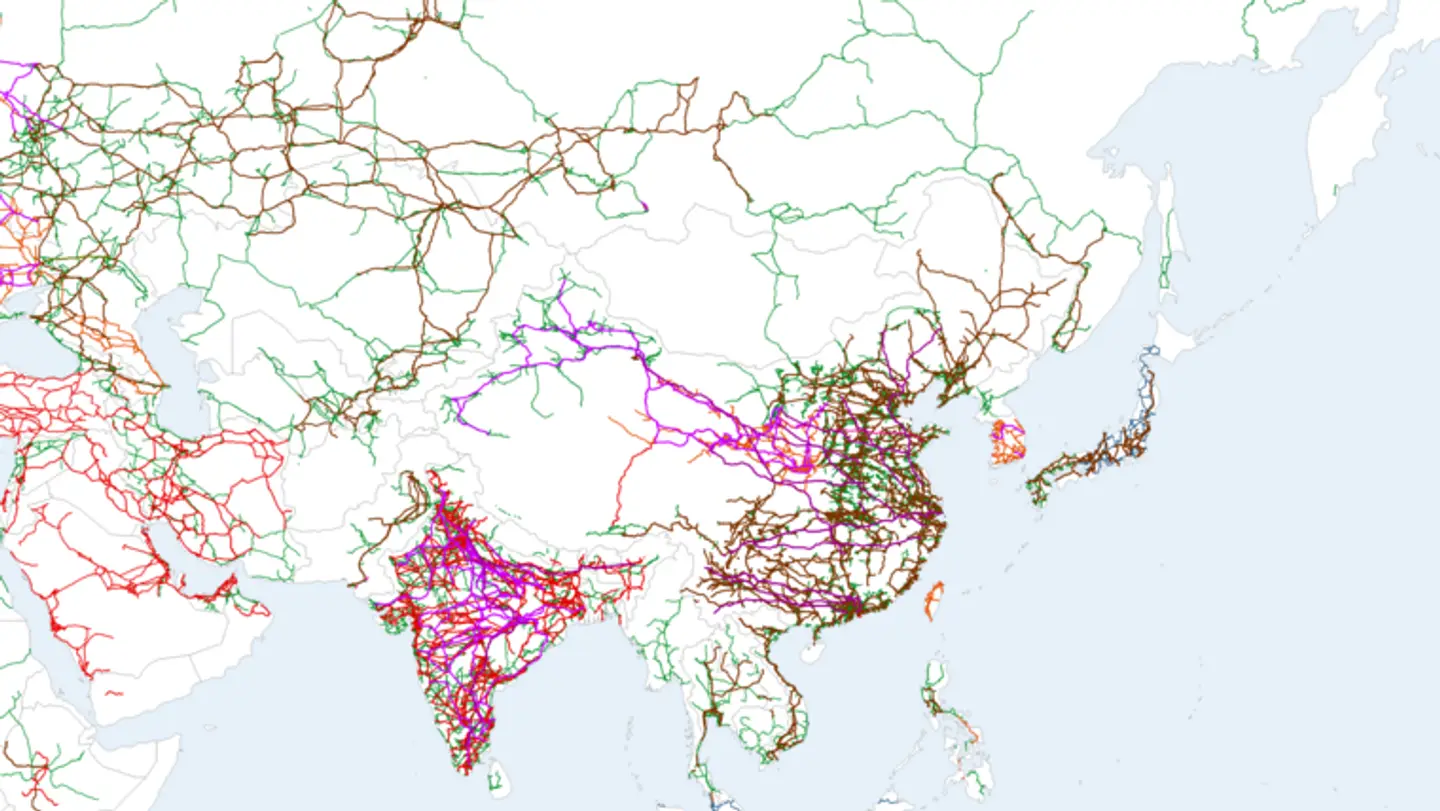
“Ultra-high-voltage” sounds like comic-book language, but it’s a technical category: alternating current at 1,000 kilovolts (a million volts) or more, or direct current at 800 kilovolts or more. These lines move enormous amounts of power across very long distances without losing much of it along the way. As of December 2025, Global Energy Monitor counted 45 of them operating in China.
The Xiangjiaba–Shanghai line, which carries hydropower from China’s southwest to Shanghai, runs about 1,980 kilometers (roughly 1,230 miles) at 800 kilovolts and can move 6,400 megawatts. It was built in 30 months and finished a year ahead of schedule, in 2010. The Changji–Guquan line, which entered service in 2019, runs about 3,300 kilometers from Xinjiang in the far west toward eastern China at 1,100 kilovolts and carries 12,000 megawatts. That’s about as far as driving from Los Angeles to Chicago, on a single power line.
And China is speeding up. In January 2026, State Grid announced plans to invest about 4 trillion yuan, roughly $570 billion, in its network from 2026 through 2030, 40 percent more than in the previous five years.

Scale check
The wire is the strategy.
America doesn't lack sun, wind, engineers, capital, or demand. Useful power keeps getting stuck before it reaches the people who need it.
Lines of 345 kV and up, using revised FERC data reported by Grid Strategies.
Projects that came online in 2025, per Berkeley Lab.
Up 40 percent from the previous five years.
Tommy Was Right About The Hard Part
This is why that Landman scene from Chapter 3 is so annoying.
Tommy Norris’s best line is the one about wires: if everybody went electric tomorrow, “we don’t have the transmission lines to get the electricity to the cities. It would take 30 years if we started tomorrow.” Given the numbers above, he’s not far off. You need transmission, storage, substations, transformers, workers, materials, and years of unglamorous execution.
Then the scene uses that good point as a trapdoor. It turns “we have to build the system” into “so the system we have is permanent.” If something takes 30 years, that’s an argument for starting, not for giving up. The scene converts a construction problem into fatalism and lets you come away feeling like quitting is realism.
That’s backwards. If the bottleneck is transmission, build lines. If it’s permitting, fix it without steamrolling towns. If it’s transformers, build the factories. If utility rules reward the wrong investments, change the rules.
The hard part isn’t proof that the work is fake. The hard part is the work.
Don’t Learn The Wrong Lesson
There’s an easy wrong reading of this chapter, so I’ll say it plainly: the lesson is not “authoritarianism is good.”
China can move faster partly because it can force decisions through a political system Americans shouldn’t want. Consent matters. Property rights matter. Environmental review matters. A government that can build a power line across your land in 30 months can also flatten your town to do it. Don’t turn competence into romance.
The real lesson is narrower and more embarrassing: a free country should still be able to build wires.
Democracy shouldn’t mean every necessary project enters a maze and comes out as a consultant’s invoice. Local control shouldn’t mean every region enjoys the benefits of a national grid while blocking every piece of it. And skepticism shouldn’t mean the familiar fuel system gets treated like the weather while new electrical infrastructure has to win a popularity contest.
We don’t have to become China to build like the problem is real.

China isn't pure, but it treats solar, wind, storage, and transmission as a strategic advantage. That should make Americans competitive, not smug.
ABC News ↗The American Assignment
America should be good at this, and not just on a bumper sticker.
This country built the transcontinental railroad, the interstate highways, rural electrification, the internet, and a military supply network so large it practically counts as geography. When we decide something is real, we build at a scale nobody else can match.
So count this as real. Solar farms, wind farms, batteries, nuclear plants, geothermal wells, transmission corridors, substations, transformer factories, and the control software that runs the grid. None of them is perfect. The question is whether we want the advantage that comes from building a system out of the best tools available, or whether we’d rather keep letting the difficulty of building the future serve as free advertising for the past.
That’s the assignment. And it’s going to take a lot of people who are good with their hands.