You can drive for hours through corn that will never be dinner and then hear someone panic because a solar farm might use land.
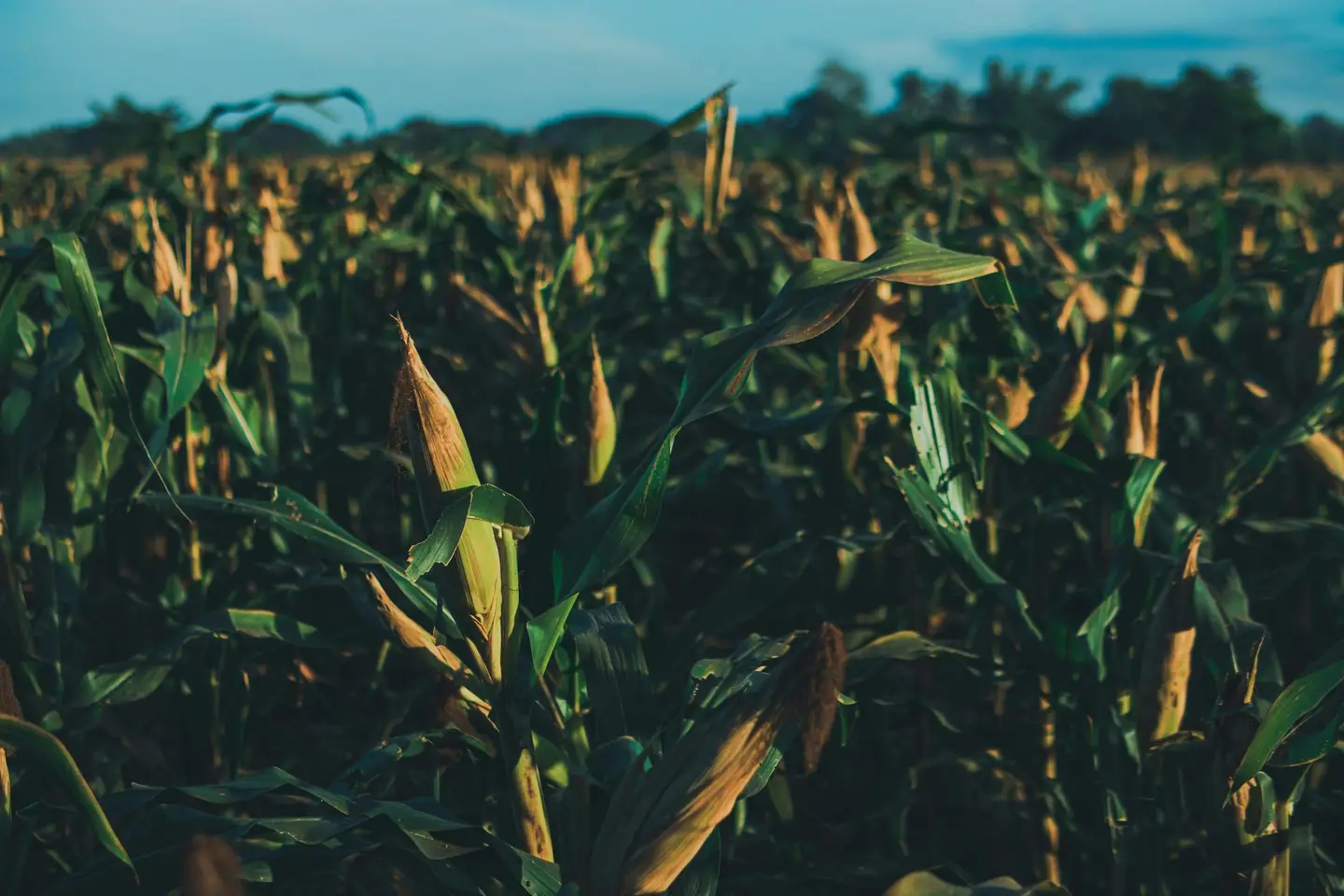
The land objection to solar isn’t always fake. Farmland matters. Habitat matters. Nobody wants to wake up and find that a developer has turned the place they grew up into an energy project while explaining that it’s for the greater good in the least comforting voice available.
But the national version of the panic gets the scale backwards. America has never been delicate with land. We have highways, suburbs, feedlots, oil fields, pipeline corridors, military ranges, and mile after mile of crops grown under federal policies most people never think about. We made enormous land choices a long time ago. We just stopped calling them choices once they got familiar.
The Scale Check
The Department of Energy estimates that a power grid built heavily on solar would need about 5.7 million acres of ground-mounted panels by 2035, about 0.3 percent of the lower 48 states. In its highest land-use scenario, that grows to roughly 10 million acres by 2050, about half a percent.
That’s real acreage. It’s also smaller than a land use most Americans have never once worried about.
Scale check
Solar's land needs, next to the corn we grow to burn.
Bars are drawn to scale. These uses aren't interchangeable, and nobody is proposing to swap one for the other wholesale. The point is which one gets treated as an invasion.
DOE's estimate for a grid where solar supplies about 40 percent of U.S. electricity. Roughly 0.3 percent of the lower 48.
About half a percent of the lower 48.
USGS: about 12 million hectares, roughly the size of New York State.
| Category | Value | Note |
|---|---|---|
| Ground-mounted solar needed by 2035 | 5.7M acres | DOE's estimate for a grid where solar supplies about 40 percent of U.S. electricity. Roughly 0.3 percent of the lower 48. |
| Solar needed by 2050, highest-land scenario | ~10M acres | About half a percent of the lower 48. |
| Cropland already growing corn for ethanol | ~30M acres | USGS: about 12 million hectares, roughly the size of New York State. |
Corn You Can’t Eat
American farmers plant somewhere between 90 and 99 million acres of corn a year; 2025 came in near 99 million. A big share of that crop goes into gas tanks. By USDA’s numbers, ethanol plants take roughly a third of all U.S. corn and more than 40 percent of the corn used domestically.
To be fair to ethanol, that isn’t all lost as food: about 30 percent of the corn’s weight comes back out of the plant as distillers’ grains, which get fed to livestock. Even after that credit, we’re talking about tens of millions of acres growing fuel.
A 2025 study by U.S. Geological Survey researchers, published in the Proceedings of the National Academy of Sciences, put the cropland devoted to ethanol corn at about 12 million hectares, roughly 30 million acres, or about the size of New York State. Then it asked an obvious question: what if a sliver of that land made electricity instead?
It’s not close. One hectare of solar panels produces about as much energy as 31 hectares of ethanol corn. By the study’s math, putting solar on just 3.2 percent of ethanol cropland would add enough power to raise the share of U.S. electricity coming from utility-scale solar (the big fields, not rooftops) by about nine percentage points.
Measured by how far it moves a car, the gap is wider still. Depending on the assumptions, estimates run from roughly 37 times as much land for ethanol (the Technology Connections example below) to about 85 times (an analysis by the Wisconsin environmental group Clean Wisconsin) to cover the same miles as solar panels charging electric cars.
None of this is an attack on farmers, who respond to the incentives in front of them like everyone else. Corn ethanol is a product of federal fuel mandates, farm-state politics, and local economies that depend on it. The target is the national story in which growing fuel on 30 million acres is normal agriculture and harvesting sunlight on a few million is an assault on the countryside.

A long, Midwestern, thoroughly practical version of the argument. Its 120-acre example: ethanol corn yields fuel for about 2 million car miles a year; the same land as a solar farm yields power for roughly 74 million EV miles. The frame is frugality: quit buying fuel forever.
Video ↗Try it
How much land does it take to move a car?
Pick how many miles get driven in a year. The calculator uses the 120-acre example from the Technology Connections video above: ethanol corn on that land moves a gas car about 2 million miles a year; a solar farm on the same land moves electric cars about 74 million miles.
The Cows Are Bigger
Then there’s grazing. In USDA’s most recent major land-use report, covering 2017, about 805 million acres of the United States were used for grazing livestock. That’s over a third of the country’s entire land area. The Bureau of Land Management alone permits grazing on about 155 million acres of public land, for a 2026 fee of $1.69 a month per cow and calf.
Nobody’s proposing to bulldoze ranches for panels. This is a visibility check. When one land use covers a third of the country and another would cover half a percent, the question is why only the second one gets people talking like the countryside is under siege.
A Property-Rights Question
If you’re a conservative who cares about property rights, one part of the land fight should bother you.
A lot of the farmers in these stories want the solar farm. A solar lease commonly pays $1,000 to $1,500 an acre per year, and sometimes more. The average cash rent for U.S. cropland (what farmers pay to rent someone else’s ground) was $160 an acre in 2026. For a family farm, leasing part of the place to a solar developer can mean steady income for 25 years, through drought, hail, and bad prices, often while keeping the land in the family.
What often stops those deals is the neighbors, acting through local government. Columbia University’s Sabin Center counted 888 state and local laws restricting renewable energy development across 48 states as of the end of 2025, and 567 projects that had run into serious local opposition. In Ohio, a 2021 law lets county commissioners ban large wind and solar projects in all or part of the county; around 30 of the state’s 88 counties had used it by 2026.
You can support some of those decisions. Communities should have a say, neighbors worry about property values and drainage for real reasons, and some projects really are badly sited. But there’s something odd about a political culture that calls itself pro-property-rights cheering when a county issues a blanket ban that tells every farmer they can’t lease their own land for the most profitable use available.
The Good-Faith Version
There is a good-faith land objection, and it deserves an answer.
Prime farmland is valuable and shouldn’t be the first place developers look. Communities should share in the benefits, through tax revenue, lease payments, and local jobs, rather than just absorbing the construction traffic. Decommissioning plans should be real and bonded, with the cleanup money set aside up front, so nobody’s left with a field of dead panels. Wildlife corridors and drainage matter.
Good projects can answer all of that. Many already do more than people expect: according to the American Solar Grazing Association, sheep graze about 129,000 acres of solar sites across 33 states, keeping the grass down and the land in agricultural use. Solar farms can be put on brownfields (old industrial sites), landfills, parking lots, warehouse roofs, and marginal ground. A solar farm is also more reversible than a subdivision: when the lease ends, the panels can come out and the ground can go back to crops.
The bad-faith version is different. It treats solar as uniquely artificial, and it shows up whenever a project needs to be stopped and the speaker doesn’t want to say they simply distrust the machine. You can usually tell because the concern is brand new: suddenly it’s soil health, or the view, from someone who never said a word about the gravel pit or the new subdivision down the road.
Compared With What?
When someone says solar uses too much land, the useful follow-up is: compared with what?
Compared with ethanol corn, it’s a fraction. Compared with grazing, it’s a rounding error. And compared with the fuel system it would replace, it’s a different kind of footprint. Researchers estimated in Science that oil and gas drilling in central North America converted about 3 million hectares (roughly 7 million acres) to well pads, roads, and storage between 2000 and 2012 alone. A solar farm’s footprint is fixed the day it’s built. A fuel system’s footprint keeps growing, because the fuel gets burned and somebody has to go find more.
And that footprint doesn’t stop at the fence line or even at the border. The most expensive acre in the whole fossil system might be a narrow strip of water on the other side of the world.